
Technical Guide · Source Post 5441
PTFE vs PFA vs FEP vs ETFE Tubing: Which Fluoropolymer Tubing Should You Choose?
Compare PTFE, PFA, FEP and ETFE tubing by temperature, chemical resistance, pressure factors, transparency, flexibility, purity and strength.
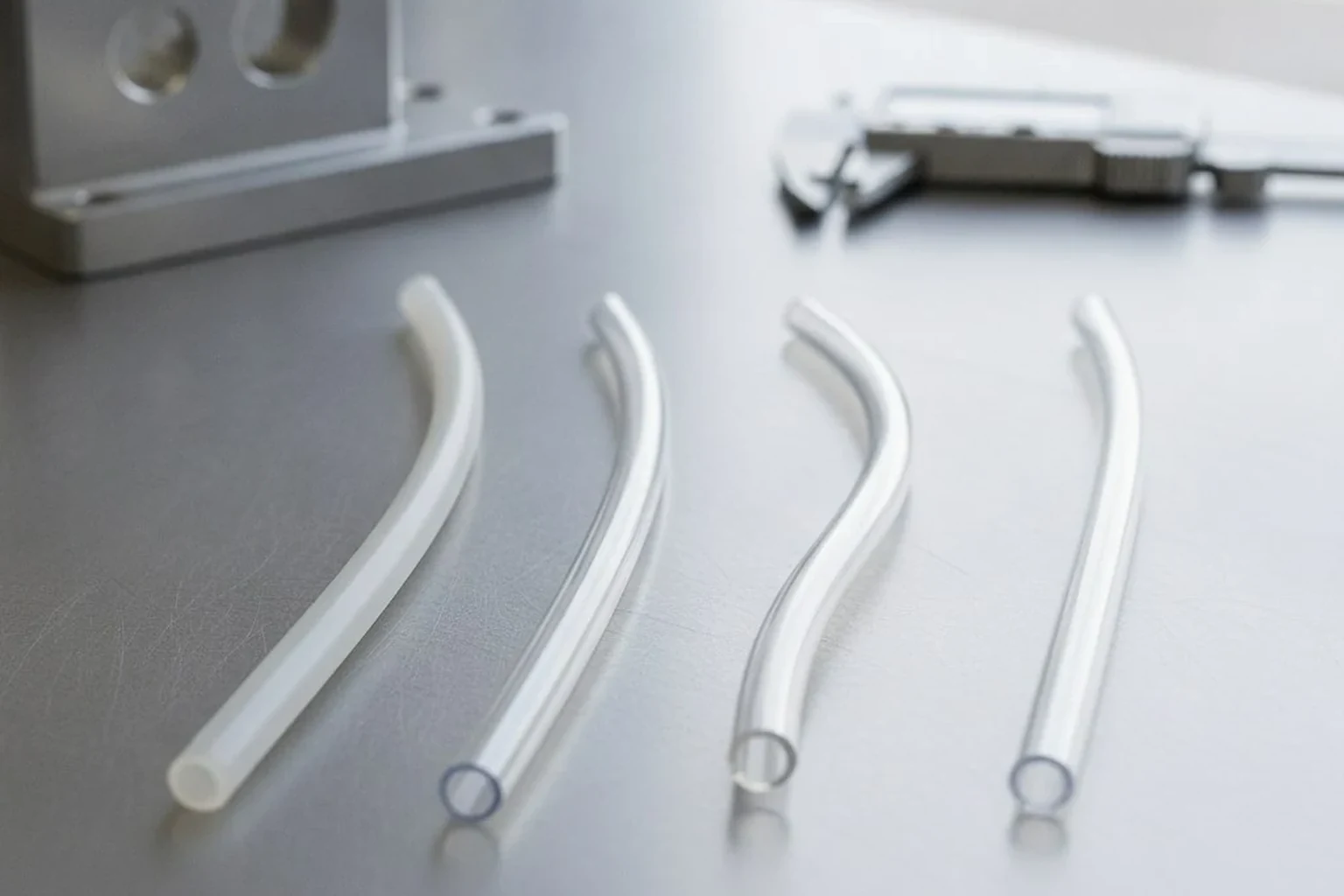
Choose PTFE tubing when maximum chemical resistance, high-temperature capability, and low friction matter more than transparency or melt processing. Choose PFA tubing when you need PTFE-like performance in a melt-processable tube for high-purity or weldable fluid systems. Choose FEP tubing when clear visibility, flexibility, and a lower typical service temperature are acceptable. Choose ETFE tubing when mechanical strength, impact resistance, abrasion resistance, or radiation durability are the priorities.
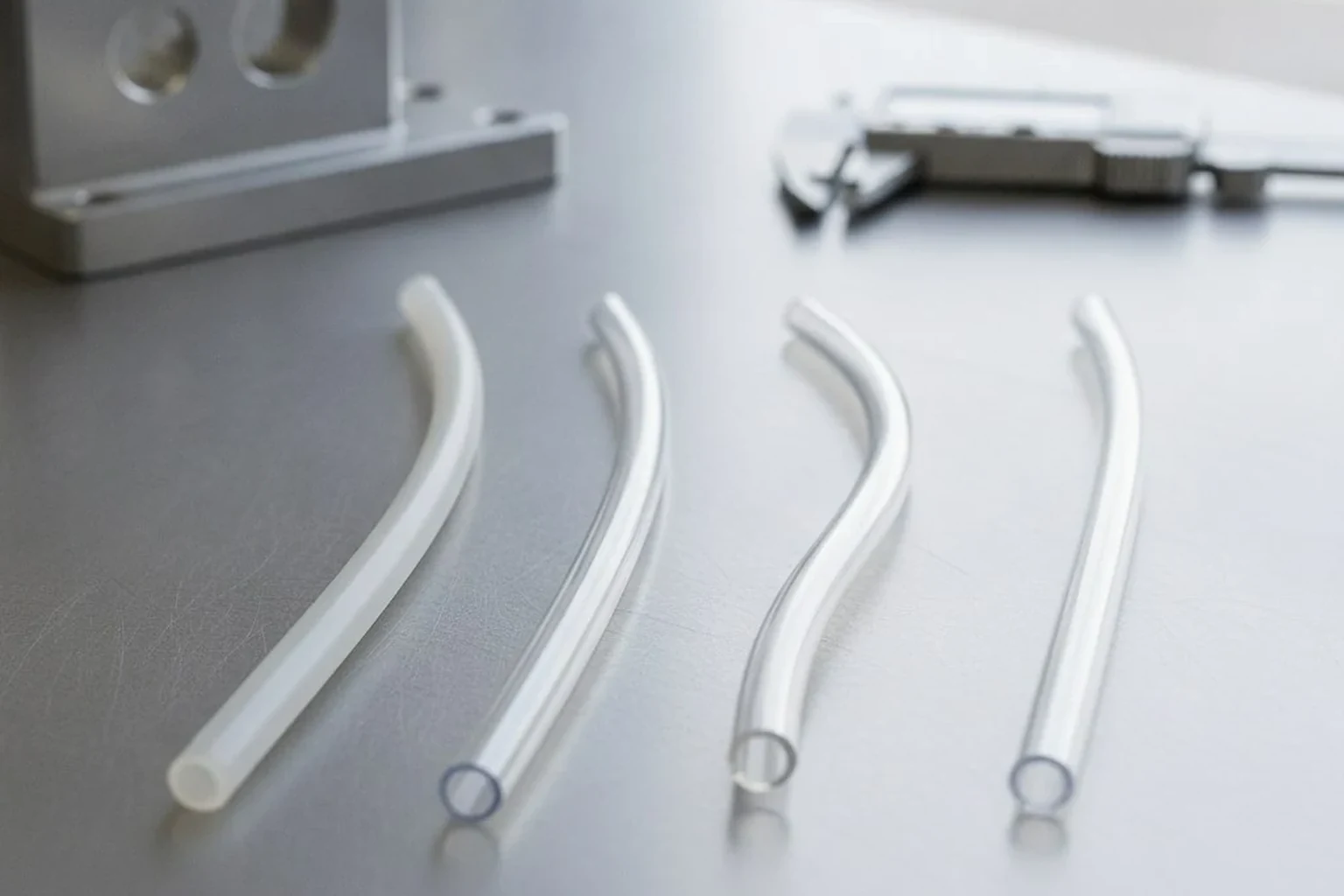
This guide compares finished PTFE, PFA, FEP, and ETFE tubing—not only the base polymers. The final choice depends on the exact resin grade, chemical and concentration, continuous and peak temperature, inner and outer diameter, wall thickness, pressure or vacuum, bend radius, movement, fittings, manufacturing quality, cleanliness, and regulatory requirements.
PTFE vs PFA vs FEP vs ETFE Tubing Comparison
| Decision factor | PTFE | PFA | FEP | ETFE |
|---|---|---|---|---|
| Typical continuous service guidance* | Up to about 260°C (500°F) for many grades | Up to about 260°C (500°F) for appropriate grades | Up to about 200°C (392°F) for appropriate grades | Standard grades are often around 150°C (302°F); some grades may be higher |
| Chemical resistance | Exceptionally broad | Exceptionally broad and close to PTFE | Excellent for many aggressive chemicals | Excellent, but not identical to the fully fluorinated materials in every condition |
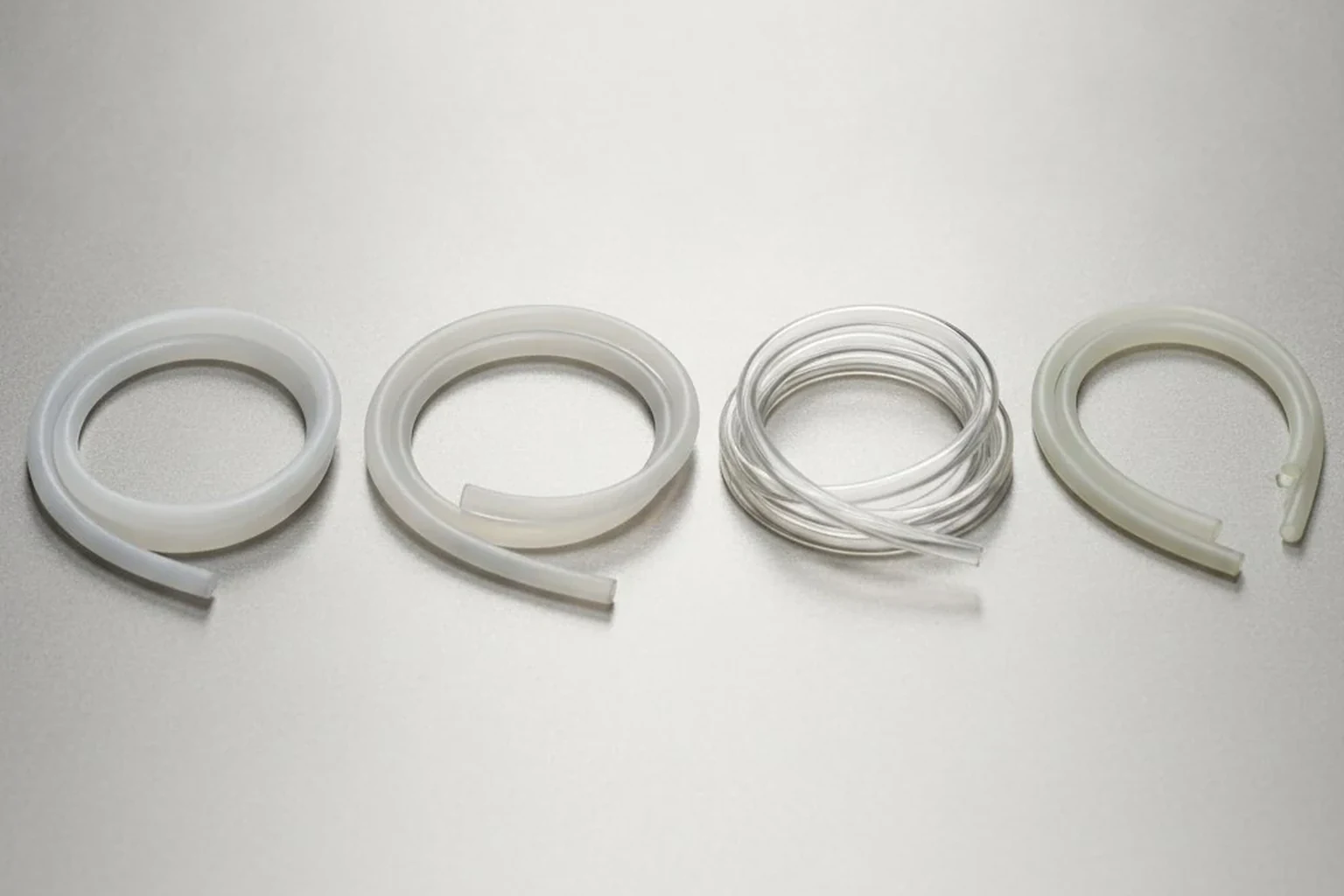
| Appearance | Milky white or translucent; not crystal clear | Translucent to relatively clear | Usually the clearest tubing option in this group | Translucent to clear depending on grade and thickness |
| Melt processable | No, not conventionally | Yes | Yes | Yes |
| Flexibility | Good in suitable thin-wall tubing | Moderate to good | Often very flexible | Usually stiffer |
| Low friction | Excellent | Excellent | Very good | Good |
| Mechanical strength and abrasion | Lower; creep and cold flow require attention | Balanced performance | Lower than ETFE | Strongest mechanical and abrasion performance in this group |
| Typical reason to select | Extreme chemical/thermal service and low friction | High temperature + high purity + melt processing | Visibility + flexibility | Toughness + abrasion + impact |
*These are material-level reference values, not guaranteed ratings for every finished tube. Temperature and pressure capability vary with grade, dimensions, wall thickness, manufacturing, fittings, safety factor, and environment.
Start With the Tubing Application, Not Just the Polymer
PTFE, PFA, FEP, and ETFE all belong to the fluoropolymer family, but they solve different engineering problems. Asking which one is “best” without defining the service conditions is like asking which metal is best without saying whether the part must resist acid, carry a load, or conduct electricity.
Start with the failure you need to prevent:
- Chemical attack, contamination, or stress cracking
- Softening or loss of strength at temperature
- Collapse under vacuum or rupture under pressure
- Kinking, abrasion, impact, or flex fatigue
- Inability to see bubbles, color, or fluid position
- Excessive permeation or extractables
- Leakage at a flare, compression fitting, or welded joint
- Failure to meet application-specific documentation requirements
Once these risks are ranked, the tubing material choice becomes much easier.
A Six-Step Fluoropolymer Tubing Selection Process
1. Identify Every Chemical the Tube Will Contact
Do not check only the main process fluid. Include concentration, temperature, impurities, cleaning agents, sterilants, lubricants, and chemicals present during shutdown or maintenance.
PTFE, PFA, and FEP provide exceptionally broad chemical resistance. ETFE also resists many chemicals, but its compatibility envelope is not identical to the fully fluorinated materials. Check the exact grade under the real exposure conditions.
Chemical resistance is also different from permeation. A tube may show no visible damage while allowing gases or vapors to migrate through its wall. This matters in analytical instruments, vacuum systems, odor-sensitive applications, and high-purity processes.
2. Separate Continuous Temperature From Short-Term Peaks
A brief cleaning cycle at 230°C is not the same as continuous operation at 230°C. Record the normal temperature, upset temperature, peak duration, peak frequency, external heat, and whether pressure is present at the same time.
PTFE and PFA are the usual starting points for the highest continuous-temperature applications. FEP operates at a lower typical limit. Standard ETFE grades are normally chosen for toughness rather than maximum heat resistance.
Temperature also reduces tube strength. A polymer may tolerate the heat chemically while the finished tube requires substantial pressure derating.
3. Evaluate Pressure or Vacuum at the Exact Dimensions
There is no universal “PTFE pressure rating” or “PFA pressure rating.” Finished-tube performance depends on:
- Inner and outer diameter
- Wall thickness and tolerance
- Resin grade and processing
- Continuous temperature
- Pressure cycles and surges
- Reinforcement, if present
- Fitting design
- Required safety factor
For vacuum, consider wall collapse, ovality, bend radius, support, and permeation. A stronger material such as ETFE may help, but geometry can matter more than the polymer name.
4. Rank Flexibility, Abrasion, and Dynamic Movement
If a tube moves with a robot, rubs against a surface, carries abrasive particles, or repeatedly flexes, chemical resistance alone is not enough.
ETFE is often the first candidate when abrasion, impact, tensile strength, or radiation resistance dominates. FEP is attractive when the tube must be soft and clear and mechanical loads are moderate. PTFE provides excellent low-friction behavior but can creep or cold-flow under sustained load. PFA balances high-temperature chemical service with melt-processable construction.
Test dynamic systems using the actual bend radius, cycle count, clamps, fittings, and temperature.
5. Decide Whether Transparency or High Purity Is Essential
FEP is usually the first material to evaluate when operators must see bubbles, fluid color, meniscus position, or contamination.
PFA can also provide useful visibility while offering a higher typical temperature capability and high-purity grade options. PTFE is normally milky white or translucent, not crystal clear. A product sold as “clear PTFE tubing” should be verified with a datasheet or material certificate because it may actually be FEP, PFA, or another modified fluoropolymer.
For high-purity service, also review extractables, surface condition, cleaning, packaging, traceability, resin grade, and contamination controls.
6. Confirm Processing, Connections, Compliance, and Cost
PTFE is formed through specialized extrusion, molding, and sintering rather than conventional thermoplastic melt processing. PFA, FEP, and ETFE are melt processable, allowing more extrusion, molding, heat-sealing, and welding options.
Melt processability does not guarantee that every tube can be welded reliably in the field. Grade, wall thickness, joint design, equipment, cleanliness, and process control still matter.
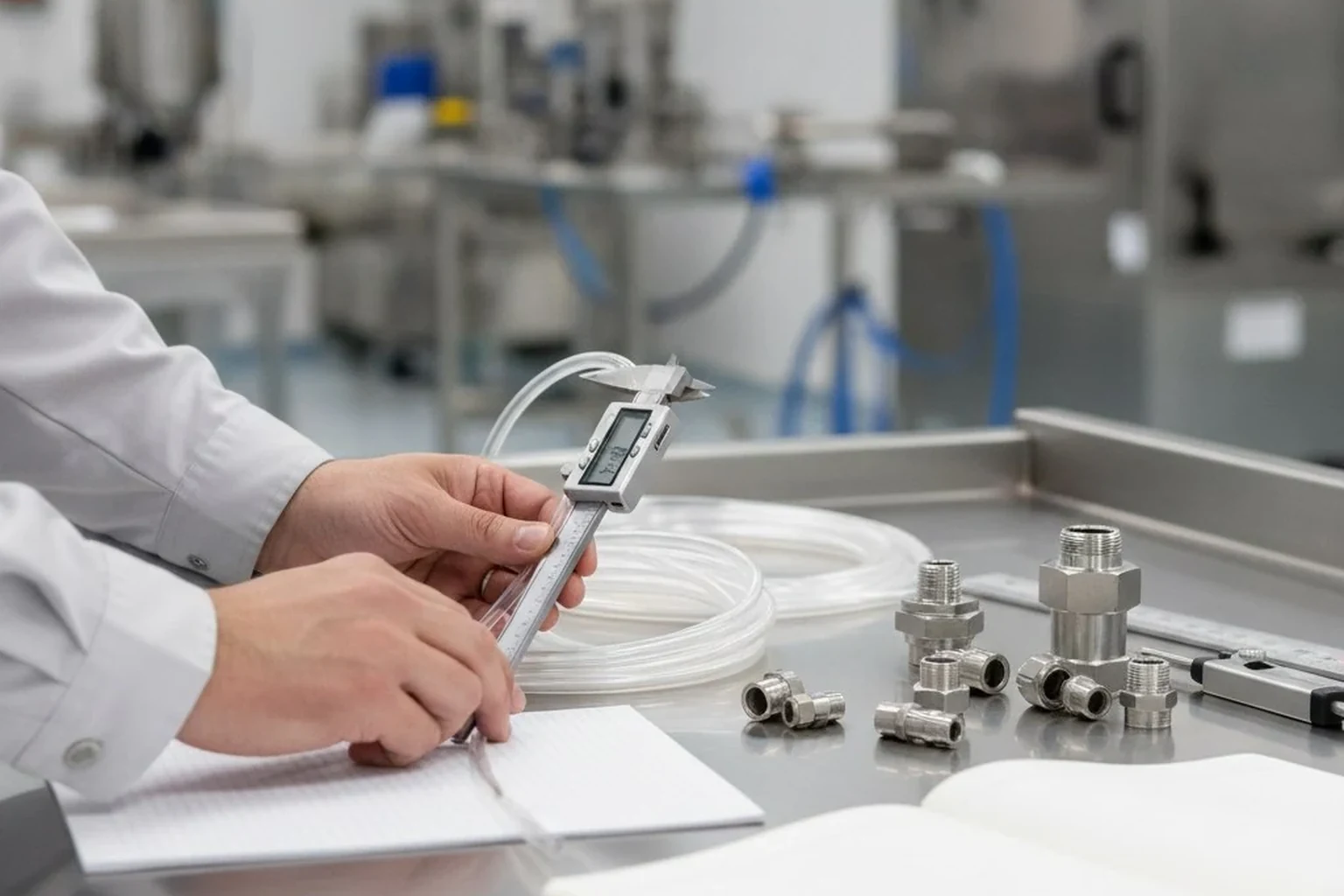
Confirm dimensions, tolerances, coil length, bend radius, fitting or welding method, certificates, traceability, required regulations, validation samples, and installed cost—not only price per meter.
When Should You Choose PTFE Tubing?
PTFE tubing is the benchmark when aggressive chemicals, high temperature, low surface energy, and low friction dominate. Finished-tube pressure capability still depends on dimensions, wall tolerance, temperature derating, fittings, and installation support.
PTFE advantages
- Exceptionally broad chemical resistance
- Typical high-temperature capability up to about 260°C for many grades
- Very low friction and non-stick surface behavior
- Excellent electrical insulation
- Wide usable temperature range
PTFE limitations
- Not conventionally melt processable
- Not crystal clear
- Lower mechanical strength than ETFE
- Creep and cold flow under sustained load
- Resin temperature capability does not define tubing pressure
- Bonding may require surface treatment
- Creep can affect ferrule sealing and dimensional stability under sustained compression
Typical PTFE tubing uses
- Aggressive chemical transfer
- High-temperature sample lines
- Low-friction liners and guides
- Laboratory and analytical tubing
- Electrical insulation
Choose PTFE tubing when chemical and thermal margins are the priorities and you do not need a clear, melt-weldable tube. Confirm bend radius, pressure derating, and fitting retention at the actual dimensions.
When Should You Choose PFA Tubing?
PFA tubing combines many of PTFE’s chemical and thermal advantages with thermoplastic melt processability. It is especially useful in systems requiring welded joints, smooth internal surfaces, controlled dimensional tolerances, and high cleanliness.
PFA advantages
- Chemical resistance close to PTFE for many applications
- Typical service capability up to about 260°C for appropriate grades
- Melt processable
- Suitable for controlled welding and heat forming
- High-purity grade availability
- Better visibility than standard PTFE
PFA limitations
- Usually one of the more expensive options
- Often less clear and less flexible than FEP
- High-purity performance depends on the grade, production controls, cleaning, and packaging
- Weld integrity requires a validated process
- Tube dimensions, ovality, and end preparation affect welded-joint consistency
Typical PFA tubing uses
- Semiconductor chemical delivery
- High-purity process-fluid systems
- High-temperature corrosive transfer
- Welded fluoropolymer assemblies
- Qualified pharmaceutical and laboratory fluid systems
Choose PFA tubing when you need high-temperature chemical resistance plus melt processing, weldability, or high-purity system design. Validate tube tolerances, joint preparation, and pressure derating for the installed assembly.
When Should You Choose FEP Tubing?
FEP tubing is often the simplest choice when visual inspection, a smaller practical bend radius, and flexibility are essential. It retains excellent chemical resistance while providing clear appearance and conventional melt processing.
FEP advantages
- Excellent transparency
- Good flexibility
- Resistance to many aggressive chemicals
- Melt processable
- Good electrical insulation
- Often more economical than PFA when its temperature range is sufficient
FEP limitations
- Typical continuous-temperature capability is lower than PTFE and PFA, commonly around 200°C for suitable grades
- Lower mechanical and abrasion performance than ETFE
- Permeation can matter in gas, vacuum, odor-sensitive, and analytical applications
- It is a different polymer, not simply “clear PTFE”
- Softer tubing can require careful support and fitting selection to prevent kinking or seal deformation
Typical FEP tubing uses
- Laboratory liquid and gas lines
- Visible-flow and bubble-monitoring systems
- Lower-temperature chemical transfer
- Heat-shrink tubing
- Wire and cable insulation
- Flexible instrumentation lines
Choose FEP tubing when visibility and flexibility matter more than the additional temperature capability of PTFE or PFA. Confirm bend radius, permeation, fitting compression, and pressure derating at operating temperature.
When Should You Choose ETFE Tubing?
ETFE tubing’s main advantage is the combination of fluoropolymer resistance with high mechanical toughness, especially where thin walls, routing loads, abrasion, or repeated movement influence service life.
ETFE advantages
- High tensile strength and impact resistance
- Excellent abrasion and cut-through resistance
- Good fatigue performance in suitable designs
- Strong radiation and outdoor durability in appropriate grades
- Melt processable
- Lower density than PTFE, PFA, and FEP
ETFE limitations
- Standard grades have a lower continuous-temperature rating than PTFE, PFA, or FEP
- Chemical resistance must not be assumed identical to fully fluorinated polymers
- Usually stiffer, affecting routing and bend radius
- Optical clarity and purity depend strongly on grade and construction
- Higher stiffness can increase routing force and fitting stress in tight installations
Typical ETFE tubing uses
- Abrasion-resistant fluid lines
- Robotics and moving equipment
- Aerospace and transportation wiring
- Radiation-exposed environments
- Mechanically demanding instrumentation
- Thin-wall tubing requiring higher structural strength
Choose ETFE tubing when wear, impact, tensile load, dynamic movement, or radiation is more likely to cause failure than extreme temperature or chemical exposure. Confirm the installed bend radius, cyclic routing, connection loads, and exact chemical compatibility.
Application-Based Recommendations
| Application | First material to evaluate | Why | Verify next |
|---|---|---|---|
| Maximum-temperature corrosive line | PTFE or PFA | Broad chemical resistance and high temperature | Welding, purity, pressure derating, fittings |
| High-purity semiconductor delivery | PFA | Melt processing and high-purity grade availability | Extractables, packaging, weld procedure, traceability |
| Clear laboratory or analyzer line | FEP | Visibility and flexibility | Temperature, permeation, pressure, compatibility |
| Low-friction guide or liner | PTFE | Very low friction | Creep, load, wear pattern, bonding |
| Moving or abrasion-prone route | ETFE | Toughness and abrasion resistance | Bend radius, cycle test, chemical exposure |
| High-temperature welded line | PFA | Heat capability plus melt processing | Joint validation and cleanliness |
| Vacuum sampling line | Application-dependent | Collapse and permeation may dominate | Wall, support, permeability, fittings |
| Electrical insulation | Any of the four | Different thermal and mechanical tradeoffs | Voltage, flame, radiation, installation stress |
Common Selection Mistakes
Calling a crystal-clear tube PTFE
Standard PTFE is generally milky or translucent. Clear tubing is more commonly FEP or PFA. Verify the polymer using traceable documentation.
Selecting only by maximum temperature
Temperature must be evaluated with duration, pressure, chemical exposure, and mechanical load. The tube or fitting may fail even when the resin survives.
Treating a resin property as a finished-tube rating
Geometry, processing, tolerance, reinforcement, installation, and fittings determine finished-product performance.
Treating chemical resistance and permeation as the same property
A tube can resist visible attack while still transmitting vapor or gas.
Ignoring creep and fitting design
PTFE can deform under sustained compression. Excessive ferrule load, thermal cycling, or unsupported weight can create leaks.
Assuming compliance from the polymer name
The words PTFE, PFA, FEP, or ETFE do not prove FDA, USP, SEMI, RoHS, REACH, medical, food-contact, or semiconductor suitability. Documents must match the exact grade and product.
Choosing by price per meter
Compare installed cost, support and fitting requirements, validation effort, replacement interval, and failure risk.
What to Provide Before Requesting a Quote
Provide the supplier with:
- Fluid or gas name, concentration, and cleaning chemicals
- Continuous, minimum, and peak temperatures
- Working pressure, surge pressure, vacuum, and safety factor
- Inner diameter, outer diameter, wall thickness, and tolerance
- Coil or cut length
- Bend radius, flex cycles, abrasion, and static or dynamic use
- Transparency and visual-monitoring requirements
- Purity, extractables, cleanliness, and packaging requirements
- Fitting, flare, compression, heat-seal, or welding method
- Color, additives, conductive or antistatic requirements
- Certificates, regulatory documents, and lot traceability
- Annual quantity and sample-validation needs
Frequently Asked Questions
Which Fluoropolymer Tubing Is Best: PTFE, PFA, FEP, or ETFE?
There is no universal best. PTFE favors maximum chemical resistance, heat, and low friction. PFA favors high-temperature, high-purity, melt-processable systems. FEP favors transparent and flexible tubing. ETFE favors strength, abrasion, impact, and radiation resistance.
Is PFA better than PTFE?
PFA is better when melt processing, welding, complex shapes, or system purity is required. PTFE may be preferable for low friction, broad chemical service, and simple tube geometries.
Is FEP the same as transparent PTFE?
No. They are different polymers. FEP is commonly clear and melt processable; standard PTFE is milky or translucent and not conventionally melt processable.
Is ETFE more chemical-resistant than PTFE?
ETFE has excellent resistance, but PTFE generally offers the broader chemical and temperature envelope. ETFE is selected when mechanical durability matters more.
Which fluoropolymer tubing is best for high pressure?
The tubing material name alone cannot answer this. Pressure depends on tube dimensions, wall thickness, tolerance, temperature, manufacturing, reinforcement, fittings, and safety factor.
Which fluoropolymer tubing is best for semiconductor chemical delivery?
PFA is frequently the first candidate because it combines chemical resistance, heat capability, melt processing, and high-purity grade availability. Final approval requires extractables, surface, packaging, welding, and traceability review.
Can these materials be used with every chemical?
No. Check the exact grade against chemical, concentration, temperature, pressure, exposure time, stress, mixtures, and cleaning conditions. Test samples when service is critical.
Conclusion
Identify the dominant failure risk first:
- Choose PTFE tubing for the strongest chemical and thermal margin with very low friction.
- Choose PFA tubing for high-temperature or high-purity service that needs melt processing or welded construction.
- Choose FEP tubing for clear, flexible routing when its lower temperature range is sufficient.
- Choose ETFE tubing for abrasion, impact, tensile strength, movement, or radiation.
Then validate the exact tube: grade, dimensions, wall thickness, temperature derating, pressure or vacuum, fittings, cleanliness, compliance documents, and installation.
For a fluoropolymer tubing recommendation, send the supplier your fluid, concentration, temperature, pressure or vacuum, dimensions, movement, connection method, and documentation requirements. A finished-tube datasheet review and representative sample test are more reliable than a generic resin comparison chart alone.
Sources and Research Notes
- AGC Chemicals, Fluon® PTFE – Functions and Features. Describes PTFE heat resistance over a broad range including up to 260°C and chemical resistance.
- AGC Chemicals, Fluon® PFA – Functions and Features and Fluon® overview. Describes PFA as chemically stable, PTFE-like, melt processable, and usable up to 260°C for relevant grades.
- Chemours, Teflon™ Fluoropolymers and the Semiconductor Industry. Describes FEP chemical/electrical properties and service temperatures up to 200°C.
- AGC Chemicals, Fluon® ETFE product information. Gives continuous service around 150°C for the referenced standard ETFE product.
- Google search and AI Overview for PTFE vs PFA vs FEP vs ETFE, accessed 2026-07-11.
- Google-indexed Reddit fluoropolymer tubing results. Direct Reddit pages returned a network-security 403, so only indexed titles and snippets were used.
- ChatGPT was given a web-search prompt on 2026-07-11, but submission redirected to login, so no response was available for analysis.
Technical Disclaimer
This article provides general engineering guidance, not product specifications or warranties. Properties vary by resin grade, additives, dimensions, manufacturing method, test standard, and supplier. Compatibility changes with concentration, temperature, pressure, exposure time, stress, and mixtures. Obtain the exact product datasheet and complete validation before approving a material for safety-critical, medical, pharmaceutical, semiconductor, food-contact, pressure, or regulated service.