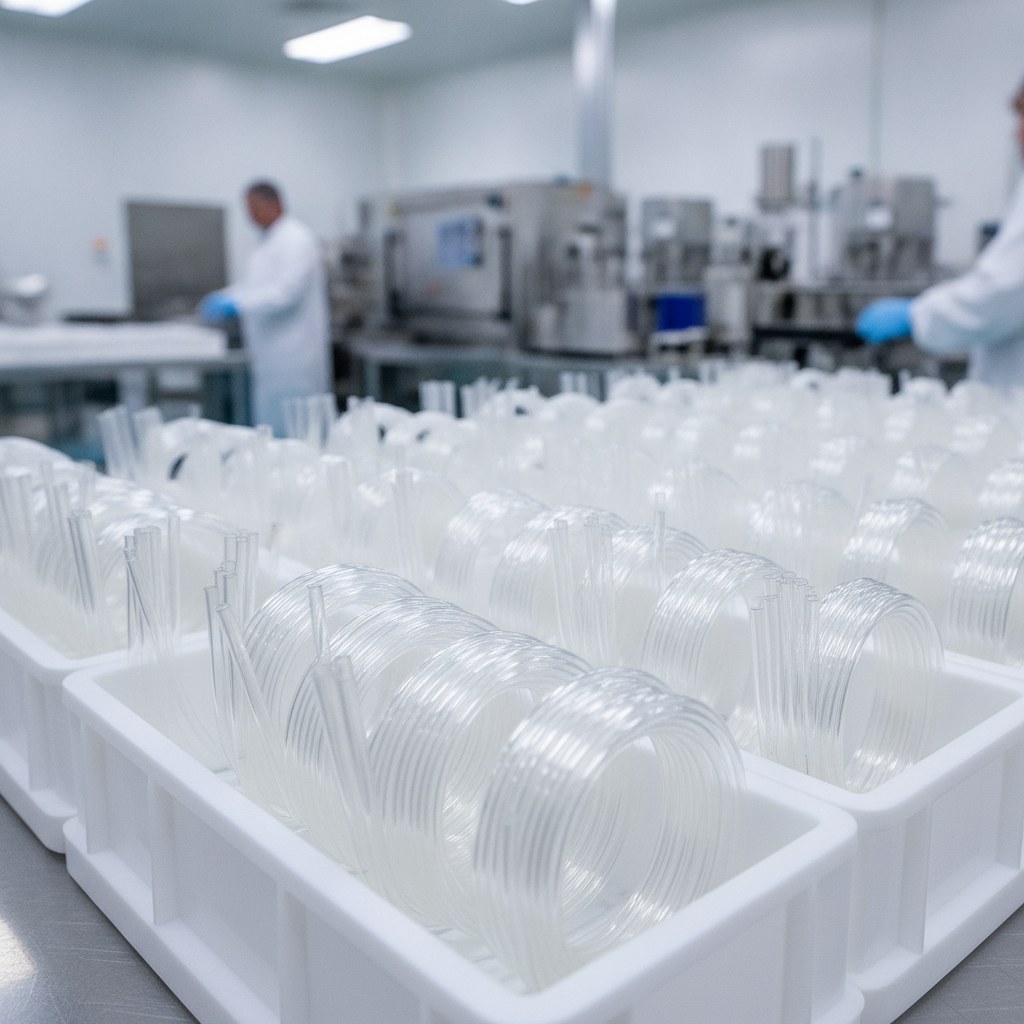

Ultra-Thin Wall FEP Tubing
Lightweight FEP tubing for compact routing, fluid observation, and assemblies that need reduced wall build-up.
- Custom ID / OD
- Transparent wall
- Low-friction surface
Thin Wall FEP Tubing
Custom thin-wall FEP tubes combine transparency, flexibility, chemical resistance, and electrical insulation for designs where every millimeter of wall thickness matters.

Specification Snapshot
FEP is often selected when a design needs a clear fluoropolymer tube that bends more easily than PTFE while keeping strong chemical resistance, low moisture absorption, and reliable dielectric properties.
Product Formats
Each product format can be quoted with target ID / OD, wall thickness, tolerance, package form, and application media.

Lightweight FEP tubing for compact routing, fluid observation, and assemblies that need reduced wall build-up.

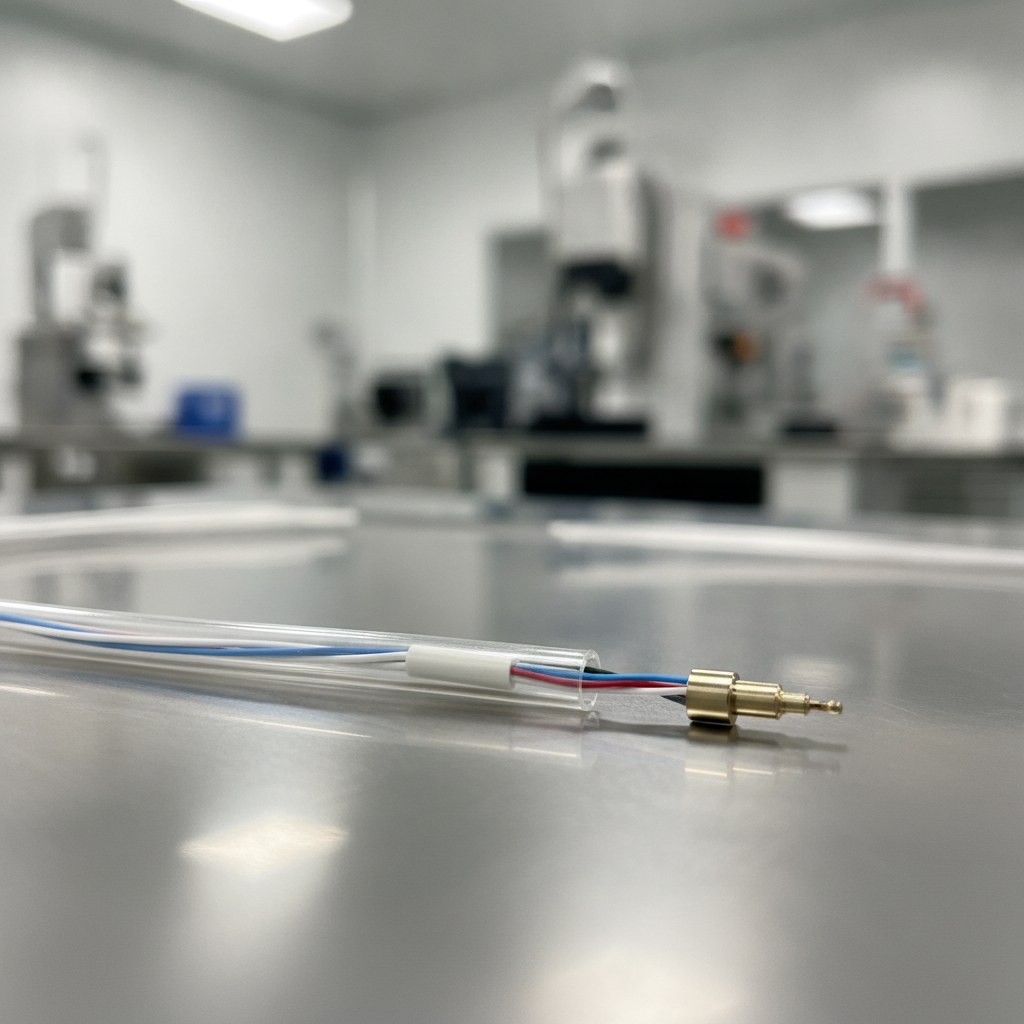
Small-diameter sleeves for probes, fine wires, compact fixtures, and analytical instruments.

Continuous thin-wall tubing for production lines that need stable routing and visual fluid inspection.

Thin-wall protective sleeves prepared for cable insulation, chemical exposure points, and assembly stations.
Applications
Use the application notes to define media, temperature, bend radius, packaging, and inspection needs before requesting samples.

Thin transparent sleeves protect fine components while keeping the assembly flexible and easy to inspect.
Discuss Your Project
Low-absorption FEP flow paths support compact routing for sample transfer and instrument connections.
Discuss Your Project
Thin-wall FEP adds dielectric protection while preserving compact bend paths inside dense assemblies.
Discuss Your Project
Transparent FEP tubing gives chemical resistance and visual flow confirmation in compact dispensing paths.
Discuss Your ProjectMaterial Comparison
FEP gives a useful balance of clarity, flexibility, chemical resistance, and processing stability for thin-wall tubing programs.
| Material | Transparency | Flexibility | Chemical fit | Best use |
|---|---|---|---|---|
| FEP | Clear | High | Broad chemical resistance | Thin-wall visible flow paths, sleeves, compact routing |
| PTFE | Translucent | Medium | Excellent chemical and temperature resistance | Higher temperature or low-friction tubing where clarity is less important |
| PFA | Clear to translucent | Medium | High purity and strong chemical resistance | High purity or higher temperature fluid handling |
| ETFE | Translucent | Medium | Good chemical resistance with strong toughness | Mechanically demanding protective tubing |
Final material choice should be confirmed against media, temperature, pressure, bend radius, sterilization, and certification needs.
Custom Manufacturing & QC
Thin-wall projects need coordinated tooling, process control, inline checks, and packaging so the tube reaches production in the same condition it was approved.

Tooling, melt control, and puller settings are aligned to stabilize the target wall thickness.

ID, OD, wall thickness, appearance, and handling condition are checked during production.

Coils, sleeves, and cut lengths are packed with batch references and project-specific handling notes.
RFQ Checklist
A complete RFQ helps engineering confirm whether the request needs tooling, a trial run, or a direct production quote.
FAQ
Use these answers to prepare the first sample request and avoid incomplete RFQ data.
Wall thickness depends on ID, OD, tolerance, tooling, resin grade, and handling needs. Share a drawing or target envelope so the manufacturing team can confirm feasibility.
Yes. The same project can include coils for continuous routing and cut-to-length sleeves for assembly stations when the dimensional target is confirmed.
FEP is commonly selected for clear or translucent fluid paths because it supports visual inspection better than many opaque fluoropolymer options.
Choose based on transparency, flexibility, chemical media, temperature, purity, and mechanical exposure. FEP is a strong thin-wall choice when clarity and flexibility are important.
Samples and pilot runs are used to confirm fit, bend behavior, assembly handling, and chemical compatibility before bulk production.
Send material, ID / OD, wall thickness, length, application, chemical media, working temperature, working pressure, quantity, certification requirements, and drawings.
RFQ Support
Share your material, dimension, application, and documentation requirements. Our team can review the target wall, packaging, and sample path before quoting production.
Include the fields below so engineering can confirm the thin-wall tubing route.